
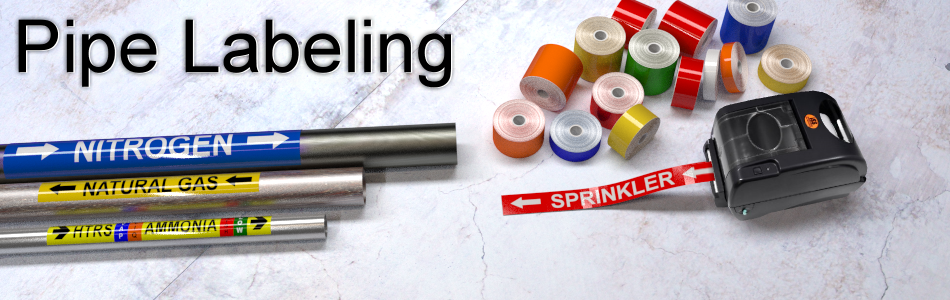
Workplace safety is a top priority for businesses in the UAE, and one crucial aspect that often goes overlooked is pipe marking. Properly labeled pipes can prevent accidents, improve efficiency, and ensure compliance with regulations. In this blog post, we will discuss why pipe marking is essential for workplace safety in the UAE and how it can help protect employees and assets.
Importance of Workplace Safety in the UAE
Workplace safety is a crucial aspect of any organization, regardless of its size or industry. It refers to the measures and procedures put in place to ensure the health and well-being of employees while they are on the job. In recent years, there has been an increased focus on workplace safety in the United Arab Emirates (UAE), as organizations recognize its importance in maintaining a productive and efficient workforce.
The UAE is one of the fastest-growing economies in the world, with a booming industrial sector fueled by construction, oil and gas, manufacturing, and other industries. With such rapid growth comes an increased need for workplace safety measures to protect employees from potential hazards. The government has taken several steps to promote workplace safety through laws and regulations that make it mandatory for employers to provide a safe working environment for their employees.
What is Pipe Marking and Why is it Essential?
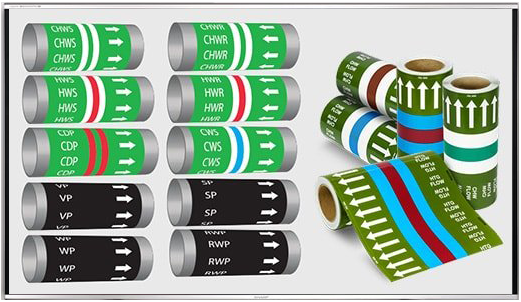
Pipe marking is the process of labeling pipes and pipelines in a facility with specific colors, symbols, and text to convey important information about the contents and flow direction. This system is crucial for maintaining workplace safety in any industry, especially in the United Arab Emirates (UAE) where there are strict regulations for health and safety.
The main purpose of pipe marking is to provide visual cues that help workers quickly identify different types of pipes, their contents, and potential hazards associated with them. By implementing a comprehensive pipe marking system, employers can reduce the risk of accidents and injuries caused by confusion or lack of information.
In most countries, including the UAE, there are specific standards that dictate how pipes should be labeled based on their content. The American National Standards Institute (ANSI) has established a standard color-coding system for pipe labels that is widely used around the world. According to this system, each color represents a different type of substance or material flowing through the pipes. For instance:
– Red – indicates fire protection systems such as firefighting water supply.
– Yellow – signifies flammable materials like gasoline or propane.
– Orange – denotes toxic or corrosive substances.
– Green – stands for potable water or other non-hazardous liquids.
– Blue – used for identifying compressed air lines.
– Purple – signals radiation hazards.
It is evident that proper pipe marking is a crucial aspect of workplace safety in the UAE. It not only ensures compliance with regulations set by government bodies but also helps prevent accidents and injuries in the workplace. By clearly labeling pipes, employees are able to quickly identify the contents and potential hazards associated with them, allowing them to take appropriate precautions when working near or handling these pipes.